
How to Reduce Cart Abandonment for Pakistani Online Stores (2026 Guide)
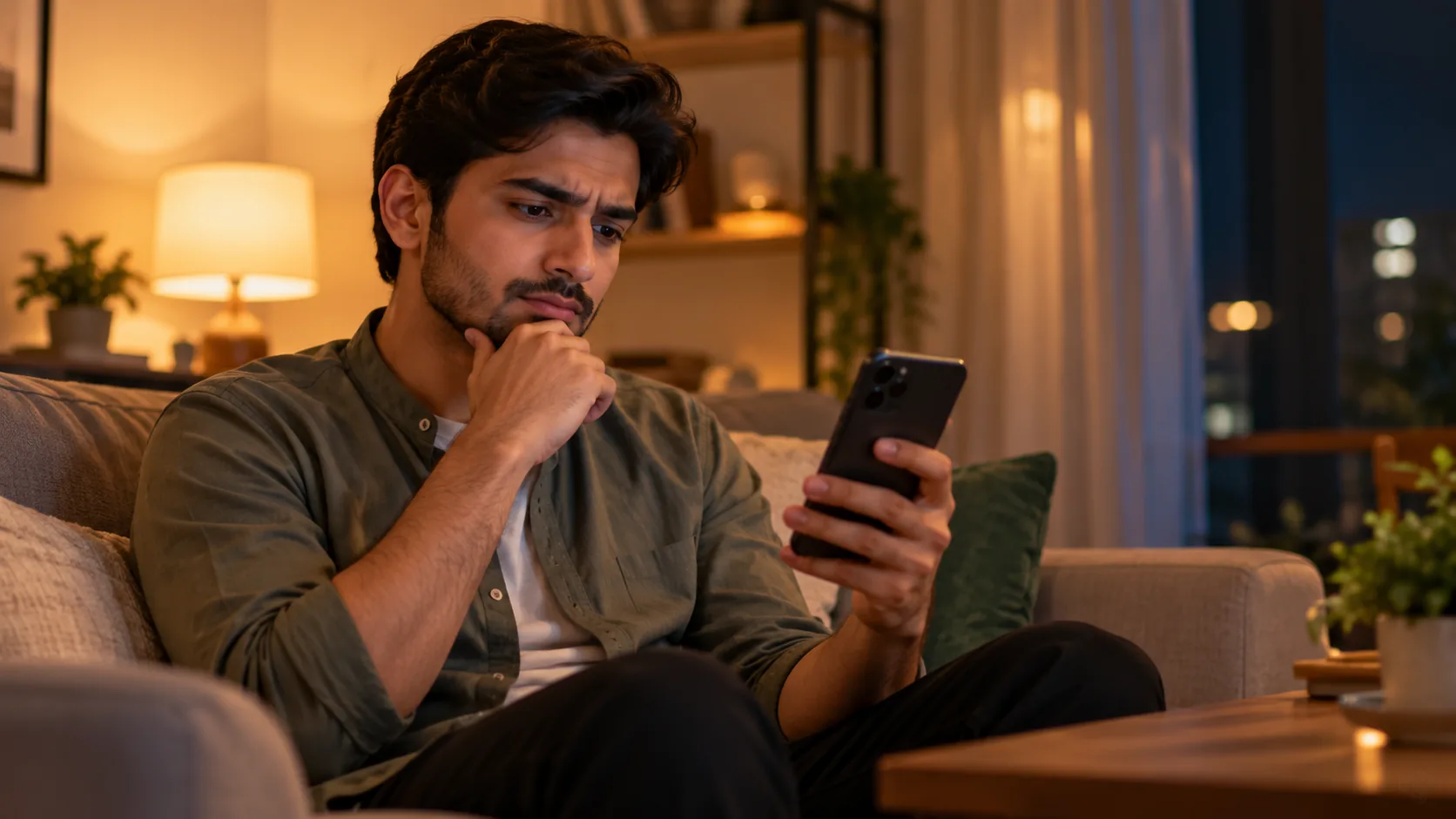
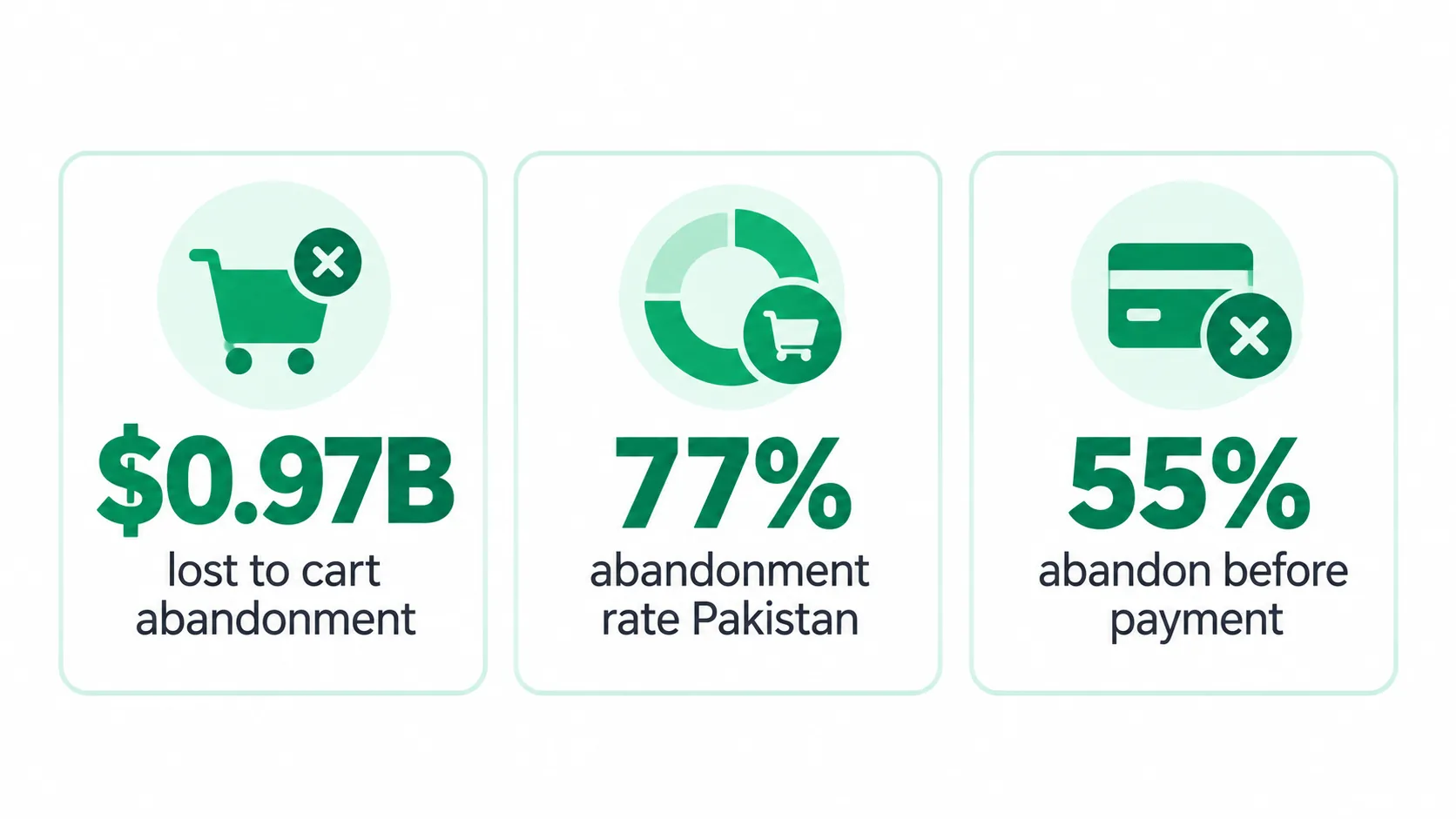
Pakistan's e-commerce sector loses an estimated $1.61 billion every year at the checkout stage. Cart abandonment alone accounts for $0.97 billion of that, more than 60 percent of the total, according to a Payoneer white paper reported by The News Pakistan in May 2026.
For a Pakistani online store on Shopify, WooCommerce, or a custom platform, the cart abandonment rate sits at approximately 77% for small and mid-sized merchants, higher than the global average of 70.22% documented by the Baymard Institute across 50 studies. More than three in four shoppers who add your product to a cart leave without buying.
The payment infrastructure problem is being solved. According to the State Bank of Pakistan's Annual Payment Systems Review for FY26, digital channels now account for 92% of retail payment transactions in Pakistan, up from 88% a year earlier. Pakistanis are paying digitally. They are still abandoning carts.
The problem is not payment friction alone. It is the trust and information gap that exists between the moment a shopper adds a product to a cart and the moment they decide whether to buy it. This guide covers what causes that gap, what can be done about it, and where live chat fits into the solution.
The Smart Nexus team works with Pakistani online businesses on live chat and chatbot implementation. The patterns described here reflect what drives abandonment on Pakistani stores specifically.
What Is Cart Abandonment and Why Does It Matter for Pakistani Online Stores?
Cart abandonment happens when a shopper adds products to an online cart but leaves without completing the purchase. Every abandoned cart is a potential sale that the store had within reach but did not convert.
For Pakistani online stores, the financial impact is direct and measurable. Pakistan's e-commerce market lost $0.97 billion to cart abandonment in 2026 according to Payoneer's analysis: money that went to no one. The shopper did not buy elsewhere. They simply did not buy.
According to research by bSecure.pk published in Aurora Magazine by Dawn Media Group, based on a study of 200 Pakistani small and mid-sized merchants:
- Cart abandonment rate: 77% for small merchants in Pakistan
- WooCommerce stores: 80% abandonment rate
- Shopify stores in Pakistan: 78% abandonment rate
- 55% of cart abandonment happens before the customer even selects a payment method
That last figure is the most important one. More than half of Pakistani shoppers abandon during the product and cart review phase, before they reach checkout. The problem is not primarily at payment. It is earlier, during the moment of purchase decision.
Why Pakistani Shoppers Abandon Carts: The Real Reasons
Pakistani cart abandonment has structural causes that are different from global patterns. Understanding them is the first step to addressing them.
The Trust Gap With Unfamiliar Stores
Pakistan's e-commerce market is still building trust. An academic study published in SAGE Open, based on empirical research across Pakistani online shoppers, found that perceived security against online scams is the primary driver of payment hesitation. Shoppers who do not trust an unfamiliar store hesitate at every decision point: product selection, payment method, order confirmation.
This trust gap creates a specific behavior: Pakistani shoppers add products to carts to hold their place while they evaluate the store further. If they cannot get answers to their questions quickly, they leave. The cart abandonment is not a payment problem: it is a trust problem that surfaces during the buying moment.
Unanswered Questions During the Buying Moment
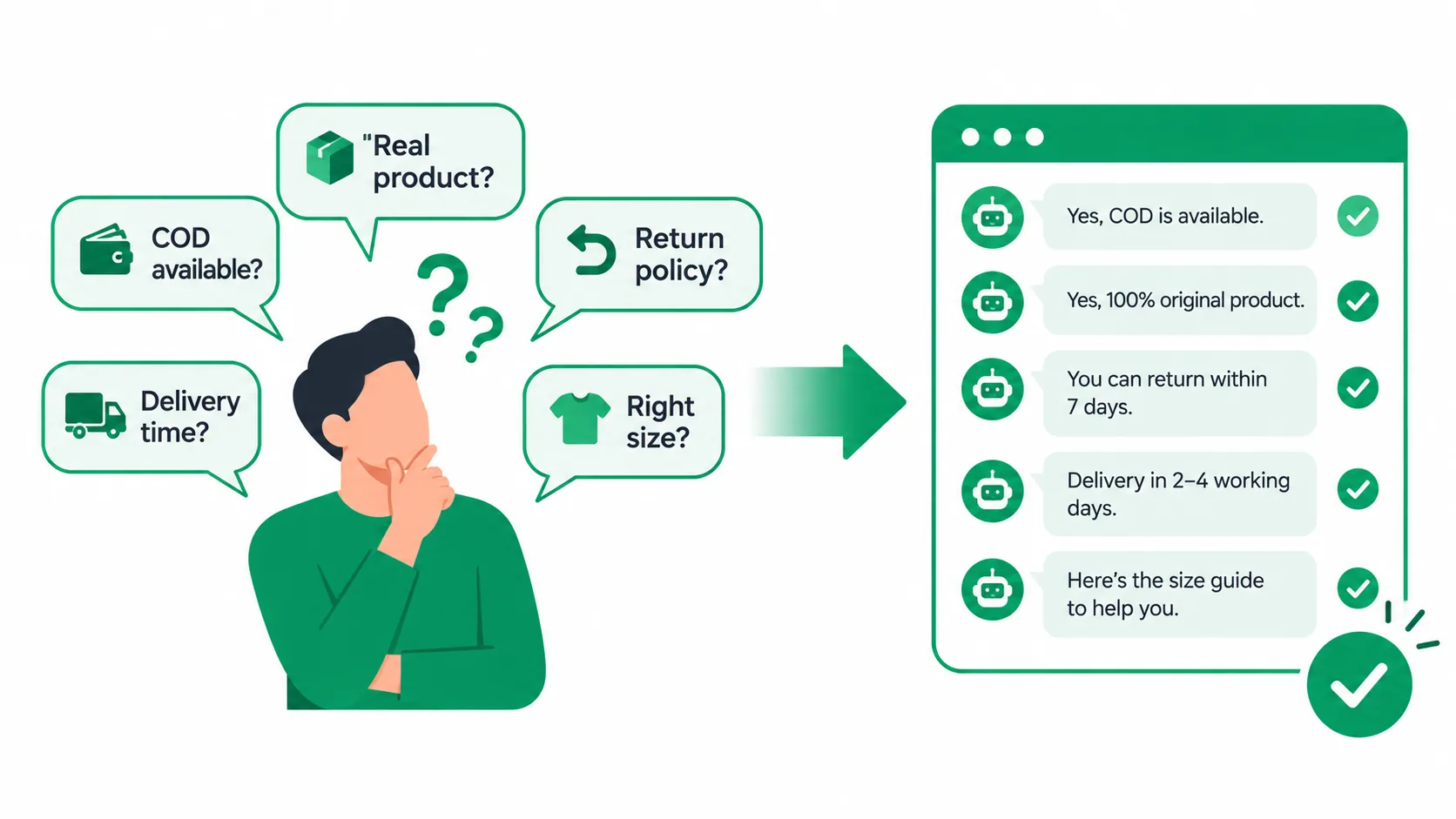
The five questions Pakistani shoppers most commonly need answered before completing a purchase on an unfamiliar store:
1. Is cash on delivery available in my city? Despite Pakistan's shift toward digital wallets, many shoppers still prefer COD for first-time purchases from unfamiliar stores. A shopper in Sukkur, Gujranwala, or Faisalabad may not be certain your courier delivers to their area. Without an instant answer, they leave.
2. What is the return and exchange policy? Pakistani shoppers who are hesitant about a store want to know they can return an item if it does not match the listing. An unclear or hard-to-find return policy is an abandonment trigger.
3. Is this product authentic or genuine? In product categories where counterfeit goods are common (electronics, branded clothing, beauty products), shoppers want reassurance before placing any order.
4. How long will delivery take? A shopper ordering something time-sensitive needs to know the estimated delivery window. An unknown timeline creates hesitation, especially for gifts, events, or urgent purchases.
5. Is the size, specification, or variant correct for my need? For clothing, electronics, and household items (the most popular categories in Pakistani e-commerce), a shopper may need confirmation on fit, compatibility, or specification before ordering.
When a shopper cannot get answers to these questions in real time, they leave. Not because they decided not to buy, but because they could not complete the decision.
Platform-Specific Friction
Aurora Magazine's research found that cart abandonment rates differ significantly by platform in Pakistan:
| Platform | Cart Abandonment Rate |
|---|---|
| WooCommerce | 80% |
| Shopify | 78% |
| WordPress / Magento 2 | Lower (varies by store setup) |
Aurora Magazine's research notes WordPress stores achieved a 40.3% gross-to-net checkout conversion rate and Magento 2 stores achieved 31.8%, suggesting lower abandonment than WooCommerce and Shopify in that study sample.
WooCommerce's higher abandonment rate in Pakistan is partly structural: WooCommerce stores often have more steps between cart and order confirmation, more redirects during payment, and less optimized mobile checkout flows. A live chat widget that answers questions mid-process reduces abandonment at the stage where it is highest.
Pakistan's Payment Landscape Has Changed, But Abandonment Has Not Fallen Proportionally
This is the nuance that most cart abandonment content for Pakistan misses.
The State Bank of Pakistan's Annual Payment Systems Review FY26 shows that digital channels account for 92% of all retail payment transactions in Pakistan, up sharply from 88% in FY25. Mobile-based payments processed more than 11.1 billion transactions in FY26. The payment infrastructure problem is being solved at scale.
But cart abandonment remains above 77%. If payment friction were the primary driver, abandonment would have dropped as digital payment adoption rose. It has not, because the core problem is not how people pay. It is the trust and information gap that exists before they reach the payment stage.
This means solutions that address only payment friction (adding more wallet options, reducing checkout steps, offering guest checkout) address part of the problem but not the part that causes 55% of abandonment before the payment screen even appears.
The part that causes pre-payment abandonment is the inability to get questions answered in real time during the buying moment. That is what live chat addresses.
How Live Chat Reduces Cart Abandonment for Pakistani Online Stores
Live chat on a Pakistani online store reduces abandonment by answering the questions that cause shoppers to leave, in real time, on the page where the purchase decision is being made, without requiring the shopper to send an email, make a phone call, or navigate to a different page.
Research on live chat's impact on e-commerce abandonment globally:
- E-commerce stores that trigger a proactive chat message during checkout can reduce cart abandonment by up to 35% (Trengo, March 2026)
- Website visitors who engage with live chat are 4.5 times more likely to convert than those who do not (Trengo, March 2026)
- Chat-to-conversion rates of 10-20% compare to 2-3% for static contact forms (charle.co.uk)
For Pakistani online stores specifically, where 55% of abandonment happens before the payment stage and the primary cause is unanswered questions during purchase evaluation, the impact of answering questions in real time is aligned with exactly the friction point that causes most abandonment.
Five Things Live Chat Does for a Pakistani Online Store
1. Answers COD and delivery questions instantly. A chatbot trained on your delivery zones and courier partners answers "Is COD available in Multan?" in seconds. The shopper stays on the product page with their cart open. The question is answered. The purchase completes.
2. Confirms product authenticity, specifications, and variants. For the categories with highest abandonment in Pakistan (fashion, electronics, beauty), a chatbot answers size guide questions, compatibility questions, and authenticity questions automatically, at any hour.
3. Builds trust through visible availability. A chat widget signals that someone or something is there to help. For a Pakistani shopper evaluating an unfamiliar store, that signal reduces perceived risk before they even type a message.
4. Captures contact details when shoppers are about to leave. When a shopper is about to abandon, a chatbot can initiate a conversation and capture their name and WhatsApp number. Your team follows up the next day. In the Pakistani market where WhatsApp follow-up is natural and expected, this converts a lost cart into a recovered sale more effectively than an email sequence.
5. Works after business hours. Pakistani shoppers browse and buy late at night. A chatbot answers questions at 11pm when no team member is available, capturing the buyer during the moment of intent rather than losing them to the morning.
What Live Chat Cannot Fix
Live chat is not a complete solution to cart abandonment. Being clear about this matters for setting realistic expectations.
Live chat does not address abandonment caused by:
Price competition. A shopper who finds your product cheaper on another site will leave regardless of how well their questions are answered.
Delivery speed that does not meet the shopper's timeline. If a shopper needs something in two days and your delivery is five to seven days, no answer changes that constraint.
Checkout friction at the payment stage. If your payment gateway redirects to an external page, times out, or offers limited wallet options, live chat does not fix the checkout flow itself.
Genuine browse-without-intent behavior. Some shoppers add to cart to save items for comparison or future reference. This is structural behavior that live chat cannot convert.
COD fraud. Pakistan's e-commerce market has a known COD fraud problem: orders placed with no intention of accepting delivery. Live chat does not address this and should not be expected to.
Live chat addresses the abandonment caused by unanswered questions and trust hesitation during the purchase evaluation phase. In Pakistan's e-commerce context, where 55% of abandonment happens before the payment screen, this is a significant and addressable portion. But it is not all of it.
How to Set Up Live Chat on a Pakistani Online Store
WooCommerce stores Live chat integrates via a WordPress plugin. WooCommerce has the highest abandonment rate in Pakistan at 80%. A chat widget combined with a checkout flow review addresses both the question-driven abandonment and the friction-driven abandonment simultaneously.
Shopify stores A live chat widget installs via a script embed or Shopify App Store plugin. No developer required for the widget installation. The chatbot configuration (delivery zones, return policy, product FAQs) takes the bulk of the setup time.
Custom stores A single JavaScript snippet installs the widget on any website. Configuration and chatbot training take longer than platform stores because the product catalog and policies need to be structured before the bot goes live.
Daraz Live chat widgets do not apply to Daraz marketplace listings. Daraz has its own built-in buyer-seller messaging. If you sell on both Daraz and your own website, implement live chat on your own store where you control the customer experience and own the customer data.
For a full comparison of live chat tools available to Pakistani online stores with PKR pricing, see the best live chat software comparison for Pakistani businesses. For a breakdown of what implementation fees cover at different price points, see the chatbot implementation cost guide for Pakistan.
Frequently Asked Questions
What is the cart abandonment rate for Pakistani online stores?
Approximately 77% for small and mid-sized merchants in Pakistan, according to research by bSecure.pk published in Aurora Magazine by Dawn Media Group, based on a study of 200 Pakistani merchants and State Bank of Pakistan payment data. WooCommerce stores in Pakistan see around 80% abandonment and Shopify stores around 78%.
Why is cart abandonment higher in Pakistan than the global average?
Pakistan's abandonment rate of 77% is higher than the global average of 70.22% because of a trust gap with unfamiliar online stores that creates hesitation throughout the purchase decision process. Research published in SAGE Open found that perceived security against online scams is the primary driver of payment hesitation among Pakistani shoppers. Shoppers who cannot get answers to questions about delivery, returns, and authenticity during the buying moment abandon rather than complete the purchase.
Does live chat actually reduce cart abandonment?
Live chat reduces the abandonment caused by unanswered questions and trust hesitation during the purchase evaluation phase. Research shows that proactive chat messages during checkout can reduce abandonment by up to 35% globally, and visitors who engage with live chat are 4.5 times more likely to convert. For Pakistani stores where 55% of abandonment happens before the payment stage, answering questions in real time addresses the dominant cause of abandonment directly.
What questions do Pakistani online shoppers most commonly need answered before buying?
COD availability in their city, estimated delivery timeline, return and exchange policy, product authenticity, and size or specification confirmation. A chatbot trained on these answers covers most of the question-driven abandonment on a Pakistani e-commerce store.
Does live chat work for Daraz sellers?
Live chat widgets work on your own website: Shopify, WooCommerce, or a custom store. Daraz has its own built-in messaging system for marketplace buyers and sellers. If you sell on both platforms, implement live chat on your own website where you control the customer experience and retain ownership of customer data. Daraz's messaging handles buyers who find you through the marketplace.
How much does it cost to add live chat to a Pakistani online store?
One-time implementation costs range from PKR 25,000 to PKR 80,000 depending on the scope, with monthly platform fees of PKR 5,000 to PKR 30,000. The chatbot implementation cost guide covers what different price points include and how to calculate 12-month total cost of ownership.
The Bottom Line
Pakistan's cart abandonment problem is not going to solve itself as digital payments improve. The payment problem is being solved: 92% of retail transactions now go through digital channels according to the State Bank of Pakistan. The abandonment rate has not fallen proportionally because the core problem is not payment. It is the trust and information gap that exists before the shopper reaches payment.
Live chat and chatbot automation address that gap directly: answering questions in real time, on the page, during the buying moment when the decision is being made.
See how Smart Nexus Assistant works for Pakistani online stores and book a free demo
Ready to transform your business with ERPNext?
Get a free consultation from Pakistan's leading ERPNext implementation partner.
Book a Free Consultation
About the Author
Bilal Bazmi is Head of Sales at Smart Nexus and built the company's website, SEO, and content strategy from the ground up. With a background in Computer Science and hands-on experience in SEO, AEO, and GEO, he writes to make ERPNext genuinely clear and useful for Pakistani business owners evaluating their options.
More from the Blog
Chatbot Setup Cost in Pakistan: What Your Implementation Fee Actually Covers
20 October 2026
How Pakistani Clinics Can Use Live Chat to Book More Patients and Reduce No-Shows
20 October 2026
WhatsApp vs Website Live Chat for Pakistani Businesses: Which Do You Actually Need?
19 October 2026