
How Pakistani Clinics Can Use Live Chat to Book More Patients and Reduce No-Shows

Every private clinic in Pakistan has the same quiet problem. A patient searches for a specialist at 10pm, lands on the clinic website, has a question about consultation fees or available doctors, finds a phone number that nobody answers at that hour, and moves on. The slot they would have booked stays empty. Nobody at the clinic knows they were ever there.
During business hours the problem looks different but is equally costly. The front desk is managing walk-ins, handling phone calls, processing payments, and managing the day's queue, all at once. Patient inquiries that arrive through the website or WhatsApp during busy periods get answered hours later, if at all. Some of those patients have booked elsewhere by then.
Live chat and chatbot automation address both problems. This guide covers how Pakistani clinics can use them to capture more patient bookings and reduce no-shows, without adding headcount.
The Smart Nexus team works with healthcare businesses in Pakistan on live chat and chatbot implementation. The patterns described here reflect what we see consistently across private clinic operations.
What Is a Healthcare Chatbot?
A healthcare chatbot is an automated conversation tool that handles patient inquiries on a clinic's website: answering common questions, capturing appointment requests, sending reminders, and routing complex queries to a human team member when needed.
It is not a clinical tool. It does not diagnose conditions, recommend treatments, or give medical advice. Its role is operational: getting the patient to the point of booking, and keeping them there through reminders and follow-up. The clinical interaction stays entirely with the doctor.
The Real Cost of Missed Patient Inquiries for Pakistani Clinics
Every patient inquiry that goes unanswered is a potential booking lost. For a private clinic where revenue is transactional (you earn per consultation, not per contract), a missed inquiry is a missed appointment slot that cannot be recovered.
Three ways Pakistani clinics lose patient bookings daily:
After-hours inquiries with no response. A patient searches for a dermatologist in Karachi at 9pm. They find the clinic website, read about the doctors, and want to know consultation fees and available slots. The phone goes unanswered. There is no chat widget. They try another clinic.
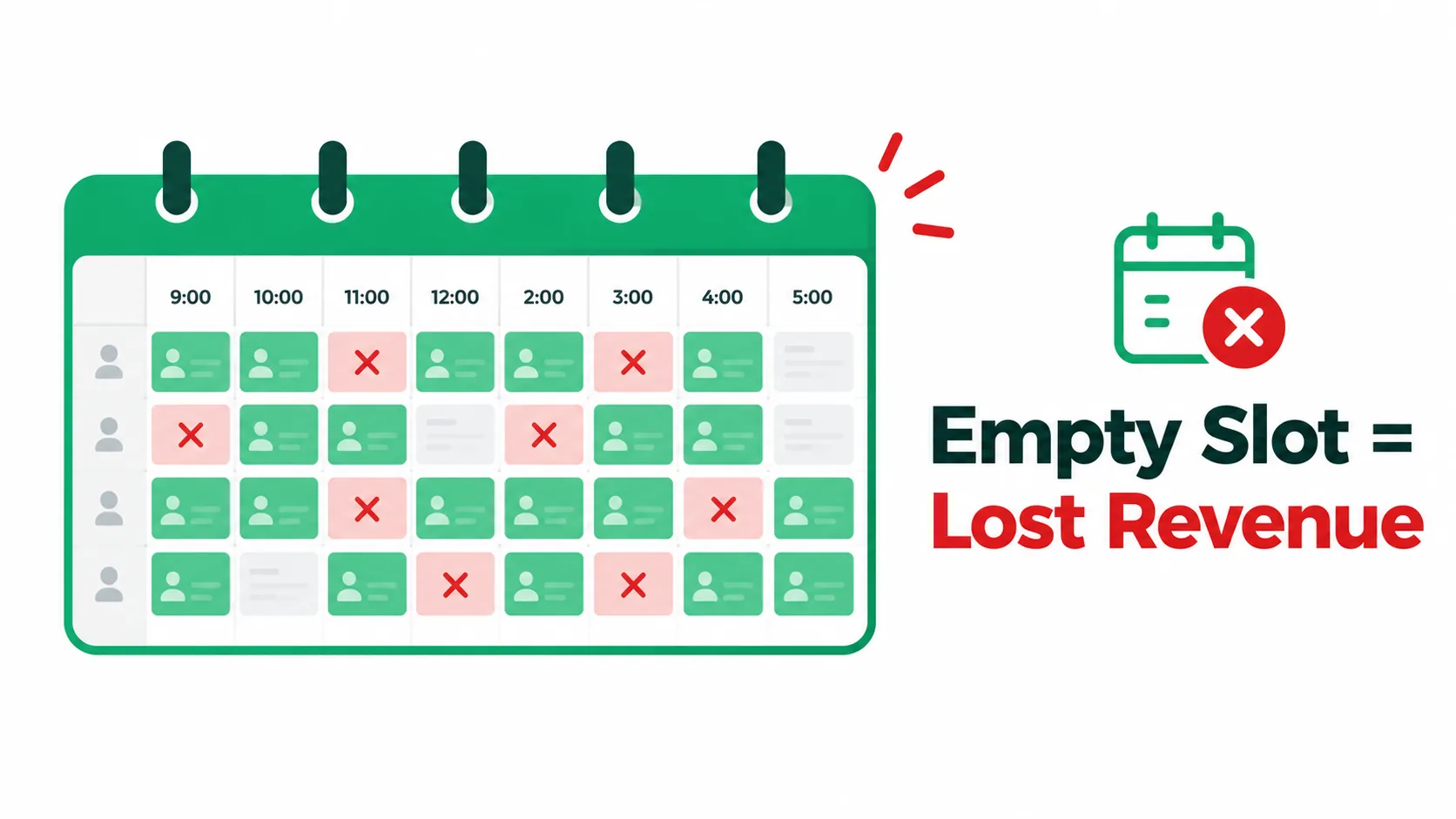
Front desk overload during business hours. Receptionists managing walk-ins, phone calls, and paperwork simultaneously cannot respond to website or WhatsApp inquiries in real time. Patients who do not get a quick response often do not wait.
No-shows from patients who forgot. Research on outpatient clinics across the Middle East and South Asia region shows no-show rates between 20% and 50% depending on the clinical setting, with forgetting cited as a primary driver. A 2018 study published in the Shiraz E-Medical Journal found a 50.1% no-show rate across 148,077 outpatient appointments at a teaching hospital in Tehran. While this study is not Pakistan-specific, it reflects patterns seen across the region's healthcare systems. A 2026 report on Middle East clinic AI adoption by Thikaa found that 42% of patients who missed appointments said they simply forgot, and that 67% of no-shows could have been prevented with a timely reminder.
What a Chatbot Can Do for a Pakistani Clinic
A chatbot on a clinic website handles patient inquiries automatically: answering common questions, capturing booking requests, and sending reminders, without requiring a receptionist to be available.
Five specific things it handles:
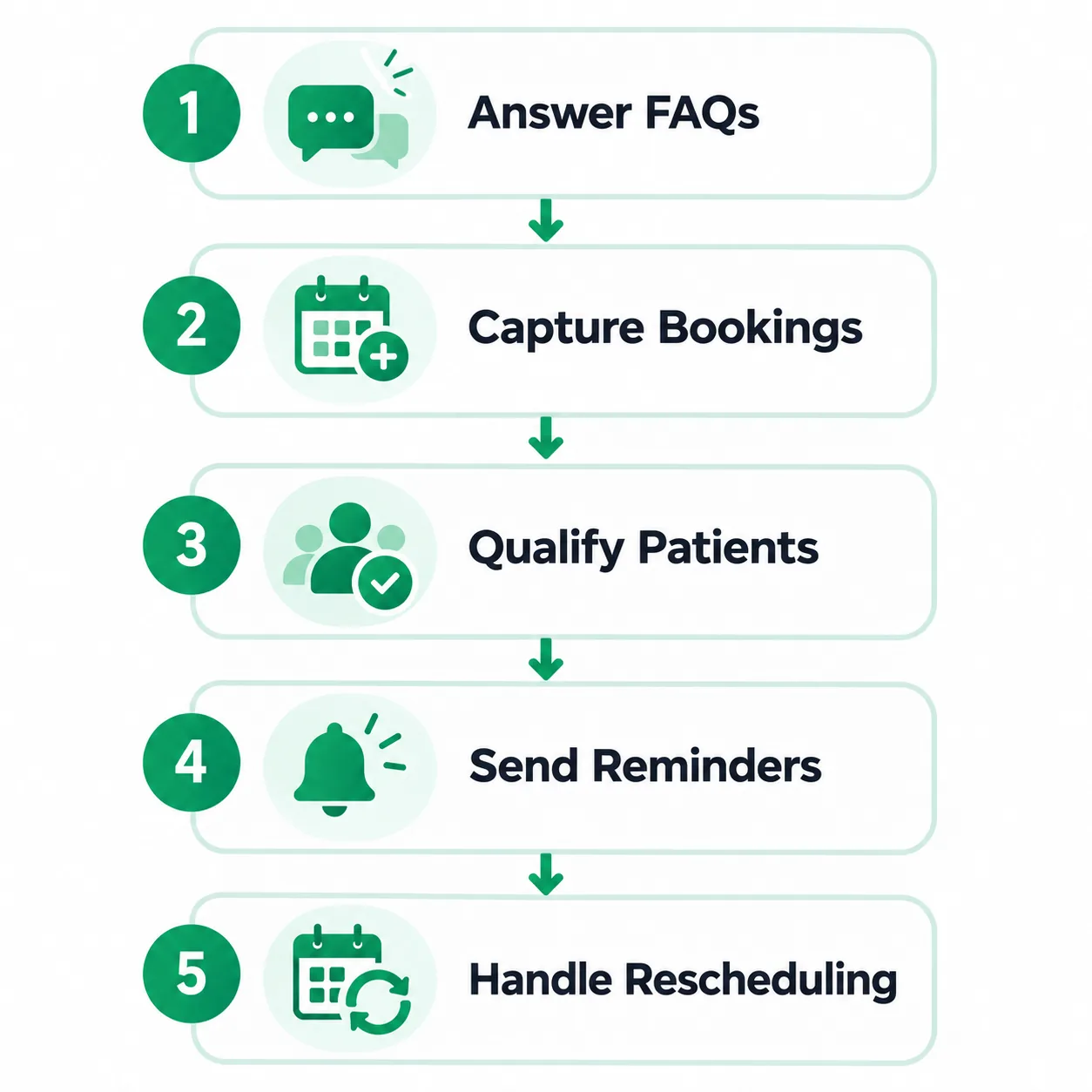
1. Answer common patient questions automatically. Consultation fees, available doctors, clinic hours, location, parking, accepted insurance. These are the same questions every front desk answers dozens of times per day. A chatbot answers them instantly at any hour, freeing the receptionist to focus on patients who are physically present.
2. Capture appointment requests after hours. A patient who visits the website at 10pm can request an appointment through the chat widget. The chatbot collects their name, contact number, preferred doctor, and reason for visit. The request sits in the dashboard, ready for the front desk to confirm first thing in the morning. No inquiry is lost to timing.
3. Qualify the patient before the booking. Is this a new or returning patient? What is the reason for the visit? Does the patient need a specialist or a general physician? A chatbot gathers this information before the appointment is confirmed, so the front desk already has context when they call to confirm.
4. Send appointment reminders. A chatbot can send a reminder message before the appointment: the day before, the morning of, or both. Given that forgetting accounts for a significant share of missed appointments, an automated reminder is one of the highest-return things a clinic can implement. Regional clinic data shows that clinics using automated WhatsApp reminders have reduced no-show rates by significant margins, with one five-hospital chain in Cairo reporting a drop from 26% to 14% after implementing automated WhatsApp reminders.
5. Handle rescheduling requests. A patient who needs to change their appointment can do it through the chat widget instead of calling. This reduces the number of no-shows caused by patients who wanted to cancel or reschedule but could not reach the clinic.
A Realistic Scenario: A Specialist Clinic in Karachi
A dermatology clinic in DHA Karachi has three doctors and sees approximately 40 patients per day. The front desk handles all bookings by phone and walk-in.
Current situation: the clinic website gets visitors from search but has no way to capture inquiries. Patients who visit outside business hours either call back the next day or book with a competitor. During business hours, the receptionist is managing the physical queue and cannot respond to website inquiries in real time.
With a chat widget and chatbot:
- After-hours visitors request an appointment through the website. The chatbot collects their details and the front desk calls to confirm in the morning. No inquiry is lost to timing.
- Common questions about fees and doctors are answered automatically, reducing incoming phone volume.
- Patients who book receive an automated reminder the day before, reducing the number of no-shows.
- Patients who need to reschedule can do so through the widget instead of calling.
This is an illustrative scenario representing the typical situation in private specialist clinics in Karachi, not a specific named client.
What Clinics Should Not Expect From a Chatbot
A chatbot is not a replacement for medical expertise and should never be positioned as one. This distinction matters both for patient safety and for the clinic's reputation.
A clinic chatbot should not answer clinical questions about symptoms or conditions. It should not make medication recommendations. It should not suggest diagnoses or promise specific medical outcomes. Any chatbot deployed for a clinic must be clearly limited to booking, information, and reminders.
What it should do is get the patient to the appointment. The clinical interaction stays with the doctor.
Before deploying any chatbot on a clinic website, confirm that the conversation flows are strictly limited to booking, consultation fees, hours, and general clinic information. If a patient asks a clinical question, the chatbot should acknowledge it cannot help with that and offer to connect them with the team.
Five Things to Check When Adding Live Chat to a Pakistani Clinic
Not all live chat tools are built with healthcare in mind. Before choosing one, verify these five things:
1. Does the chatbot stay within a booking and FAQ role? The conversation flows must be strictly limited to booking, fees, hours, and basic clinic information. Test it with clinical questions to confirm it declines them appropriately.
2. Is patient data handled securely? Patient names, contact numbers, and visit reasons collected through the chat widget are personal information. Ask the provider how data is stored, who has access, and how long it is retained after the appointment is complete.
3. Can it handle Urdu? Many patients, particularly in Lahore and smaller cities, are more comfortable in Urdu. A chatbot that only operates in English misses a significant portion of the potential patient base for most Pakistani clinics.
4. Does it integrate with your appointment system? Or does it collect requests that the front desk then enters manually? Both models work, but knowing which you are getting matters for workflow planning.
5. Who manages the chatbot content after go-live? Consultation fees change. Doctors join and leave. The chatbot content needs to stay updated. Confirm who is responsible for updates and how quickly they can be made.
For a comparison of live chat tools available in Pakistan, including pricing in PKR, see the best live chat software comparison for Pakistani businesses.
Frequently Asked Questions
Can a chatbot book appointments automatically for a clinic in Pakistan?
A chatbot can collect appointment requests automatically at any hour: patient name, contact number, preferred doctor, and reason for visit. Whether the appointment is confirmed automatically or requires a front desk call depends on whether the chatbot is integrated with the clinic scheduling system. Most smaller clinic implementations collect the request and have the front desk confirm it.
Is it safe to use a chatbot for patient data in Pakistan?
Patient names and contact details collected through a chat widget are personal information. Before deploying any chatbot for a clinic, confirm how patient data is stored, who can access it, and whether data is retained or deleted after the appointment is complete.
Can the chatbot answer medical questions for patients?
A clinic chatbot should be strictly limited to booking, fees, hours, and general clinic information. It should not answer clinical questions about symptoms, conditions, or treatments. Any attempt to provide medical guidance through a chatbot creates risk for the clinic and confusion for the patient.
How much does live chat setup cost for a clinic in Pakistan?
Implementation costs for a website live chat and chatbot in Pakistan typically range from PKR 25,000 to PKR 80,000 as a one-time implementation fee, with monthly platform costs of PKR 5,000 to PKR 30,000 depending on the provider and scope. See the complete chatbot pricing guide for Pakistani businesses and the chatbot implementation cost breakdown for a full explanation of what different price points cover.
Does the chatbot work after business hours?
Yes. The primary operational benefit of a chatbot for a clinic is precisely that it works when the front desk is closed, capturing appointment requests from patients who search for healthcare after hours or on weekends.
How long does it take to set up live chat for a clinic?
A basic FAQ and appointment request chatbot for a clinic typically takes two to four weeks to configure, test, and go live. This assumes the clinic provides its consultation fee list, doctor profiles, and common FAQ content during setup. The content preparation step is essential: a chatbot loaded with incomplete or inaccurate information will give incorrect answers to patients.
The Bottom Line
A private clinic's revenue depends on booked appointments. Every patient who searches for a specialist after hours and finds no way to reach the clinic is a booking that goes to a competitor. Every patient who forgets their appointment is a slot that goes empty.
Live chat and chatbot automation address both. Not by replacing the front desk or the doctor, but by making the clinic accessible at the moment a patient has a question, which is often 9pm, not 10am.
See how Smart Nexus Assistant works for healthcare businesses and book a free demo
Ready to transform your business with ERPNext?
Get a free consultation from Pakistan's leading ERPNext implementation partner.
Book a Free Consultation
About the Author
Bilal Bazmi is Head of Sales at Smart Nexus and built the company's website, SEO, and content strategy from the ground up. With a background in Computer Science and hands-on experience in SEO, AEO, and GEO, he writes to make ERPNext genuinely clear and useful for Pakistani business owners evaluating their options.
More from the Blog
Chatbot Setup Cost in Pakistan: What Your Implementation Fee Actually Covers
20 October 2026
WhatsApp vs Website Live Chat for Pakistani Businesses: Which Do You Actually Need?
19 October 2026
Best Live Chat Software in Pakistan (2026): An Honest Comparison for SMBs
13 October 2026